Free shipping on orders $50+

NorCal Nectar

Education

Learn honey, then buy better

Four topic hubs, each collecting the articles for one subject and linking to the product they are actually about. No hub sends you somewhere unrelated.

Beekeeper examining a honeycomb frame at a Northern California apiary

Why learning matters

Honey labelling is loose. “Pure”, “natural” and “from the hive” are not regulated grades, and a jar can be heated, fine-filtered and blended across continents while still using all three. Knowing what the processing words actually mean is the difference between paying for honey and paying for a label.

Ways to use honey

Practical starting points rather than a list of health promises.

Morning rituals

Stir raw honey into coffee or tea, or drizzle it over oats. One honey stick equals about one teaspoon if you would rather not carry a jar.

Baking

Swap honey for refined sugar at about three-quarters cup honey per cup of sugar, reduce other liquid by about two tablespoons, and drop the oven 25°F.

Boards and pairings

Wildflower honey and honeycomb both hold up next to aged cheese, nuts and stone fruit. Cut comb into squares rather than slices so it keeps its shape.

Infusions

Honey takes on chilli, citrus peel and herbs well. Infuse gently and keep the honey below 95°F if you want it to stay raw.

Latest raw honey guides

Raw Honey Benefits & Education

Is Raw Honey Safe During Pregnancy?

Raw Honey Benefits & Education

Is Raw Honey Safe During Pregnancy?

Pregnant and curious about raw honey? We break down safety, benefits, and common misconceptions to help expecting mothers make informed choices.

3 min read
Buyer Guides & Shopping

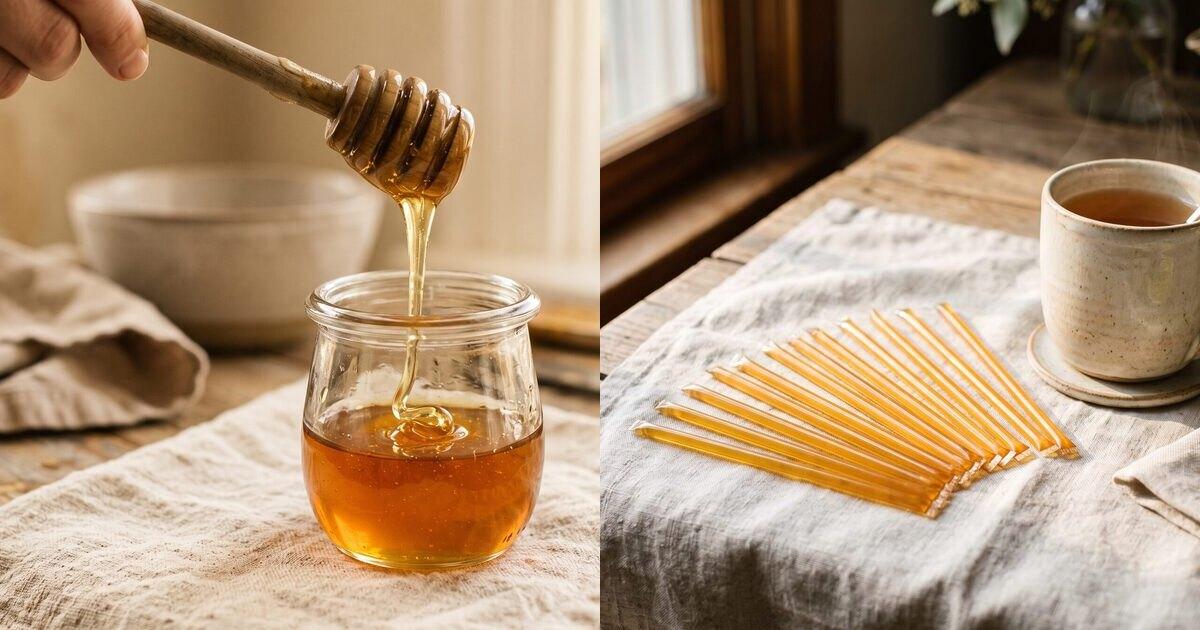
Best Honey for Tea: Jar vs Honey Sticks (2026)

Jarred raw honey gives daily tea drinkers the best value and control. Honey sticks trade a little cost for a clean, measured serving wherever you brew.

10 min read

Propolis

Propolis vs Manuka Honey: Which Wins for Immunity?

Propolis delivers concentrated flavonoids and CAPE for systemic immune defense at $0.30–$0.60 per dose. Manuka honey's MGO works locally in the throat and on wounds at $1.50–$3.00 per teaspoon. Here's the full head-to-head comparison and when to use each — or both.

12 min read

Common questions

What actually makes honey "raw"?

Raw honey is not pasteurised and not fine-filtered. Strained once through a coarse mesh to remove wax and hive debris. Never fine-filtered, so the natural pollen stays in. Most supermarket honey is heated and filtered to stay clear on the shelf, which also removes the pollen. "Raw" is a processing description, not a nutrition grade.

What's the difference between honeycomb and liquid honey?

Honeycomb is honey still sealed in the beeswax cells the bees built, cut straight from the frame. Liquid honey has been extracted from those cells and strained. The honey inside is the same; the difference is the wax, which is edible and chewed rather than swallowed.

How much honey is in one honey stick?

Roughly one teaspoon — about 5-7 grams depending on fill. That is a single serving for a mug of tea or coffee, which is why sticks are sold by pack count rather than by weight.

How should I store honey?

Store at room temperature, out of direct sun, with the cap closed. Refrigeration is not needed and speeds up crystallization. Raw honey crystallizes over time. That is normal and reversible — stand the jar in warm (not boiling) water until it clears. Honeycomb keeps best sealed at room temperature — refrigeration hardens the wax.

Why does sustainable beekeeping matter?

Managed honey bee colonies pollinate a large share of US fruit, nut and vegetable acreage, and colony losses have run high for two decades. Beekeeping practices that prioritise colony health — mite monitoring, adequate winter stores, forage diversity — keep those colonies alive between seasons.

Ready to taste the difference?

Raw honey first, honey sticks second — the two things every guide on this site is ultimately about.

Sweeter in your inbox

Be the first to know about new drops, recipes, and hive updates.