
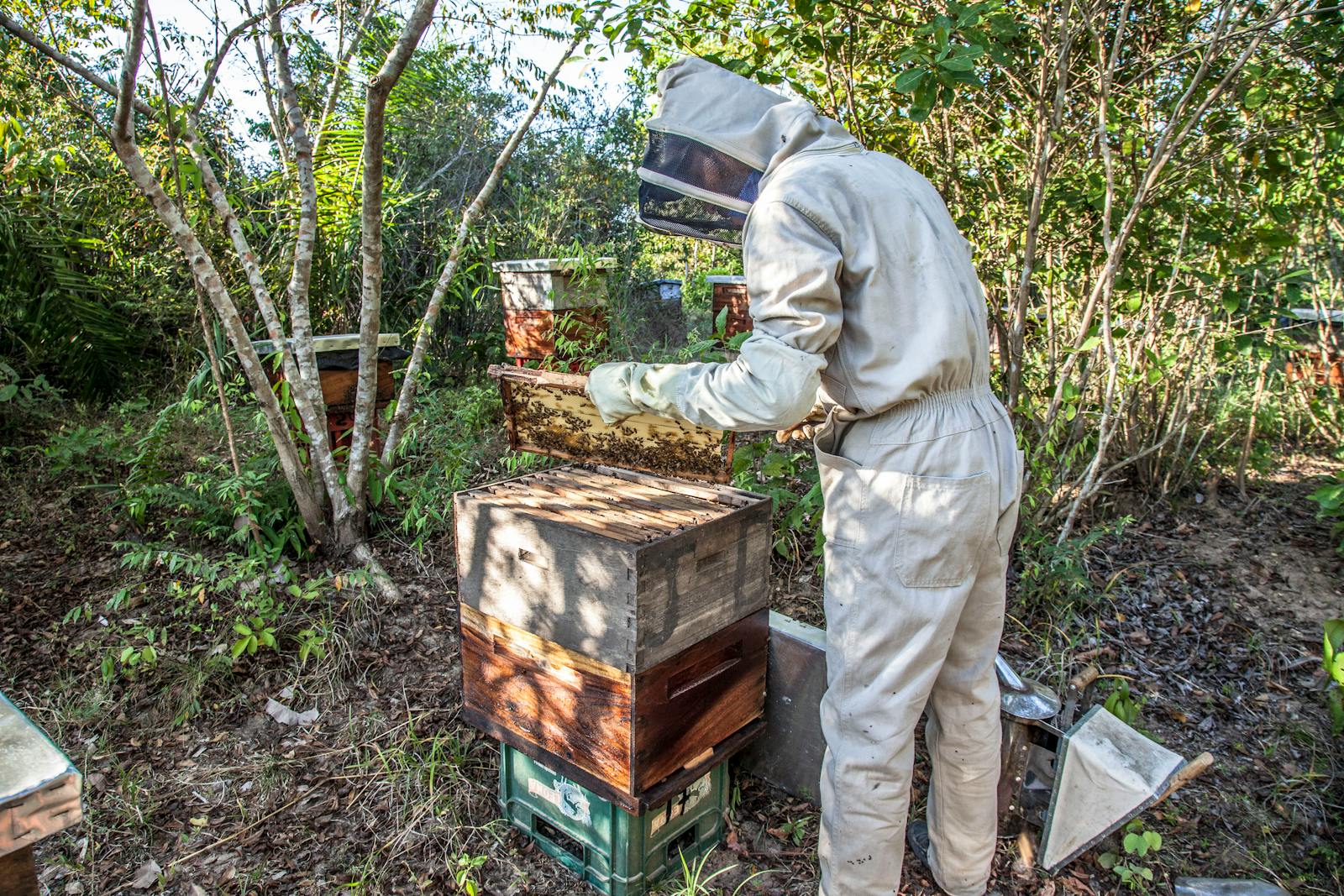
The best beekeeping suit for 2026 is a 3-layer ventilated mesh full suit with a fencing veil and round-elastic ankles in the $180-$280 range. It stops stings cold, vents body heat in 95-degree apiaries, and lasts five to eight seasons of weekly inspections. If you are in a cool, foggy climate or you only inspect in spring, a heavy cotton jacket-and-veil combo at $80-$140 is a smart starter. Anything under $50 will leak stings at the seams, and anything over $400 is paying for a brand badge -- not better protection.
We have inspected hives in 102-degree Sacramento Valley summers and 38-degree foggy April mornings on the Mendocino coast. The suit on your body matters more than almost any other piece of beekeeping gear because it controls whether you finish the inspection calmly or run from the apiary swatting at your veil. This guide breaks down ventilated vs cotton, full suit vs jacket, and the three veil styles by use case -- so you buy the right sting-proof bee suit the first time.
full beekeeping equipment list
TL;DR: For most hobbyists, buy a 3-layer ventilated full suit with a fencing veil ($180-$280). For mild-climate beginners, a cotton jacket with attached veil ($80-$140) is fine for your first season. Allergic or stung-shy beekeepers should always go full suit, ventilated, with a sheriff hood. The USDA Bee Research Lab reports that a single defensive colony can deliver 30+ stings in under a minute on exposed skin -- your suit is not the place to save $40.
Why Your Beekeeping Suit Matters More Than You Think
A bee suit does three jobs: stop stings, keep you cool enough to think clearly, and let you move freely while lifting 60-pound supers. Most cheap suits fail on at least two of those. A well-built ventilated suit nails all three.
Stings on hands or face release alarm pheromone (isopentyl acetate) that recruits more stinging bees, escalating a calm inspection into a defensive event in under 90 seconds. According to a Penn State Extension summary of honeybee defensive behavior, the alarm response can recruit 50-200 additional guard bees per minute in a strong colony. A sting-proof bee suit breaks that feedback loop before it starts.
Three things separate a real beekeeping suit from a Halloween costume: mesh density or fabric weight (enough that stingers cannot reach skin), sealed entry points (thumb loops, elastic ankles, zipper flaps), and veil construction (standoff distance from your face plus visibility through the mesh). Skip any of those and you will get stung through the suit. We see it every spring in beginner classes -- a $40 Amazon suit with a flat veil pressed to the cheek, and a beginner with a swollen face by the third frame.
full beginner roadmap to your first hive
Ventilated vs Cotton Bee Suit: Which Should You Buy in 2026?
Buy ventilated if you live anywhere with summer highs above 80F or you inspect more than twice a month. Buy cotton if your climate is cool, your inspections are short, and your budget is under $150. The temperature difference inside the two suits during a 90-degree inspection is roughly 12-18F -- enough to decide whether you finish the inspection or call it early.
A ventilated bee suit uses a 3-layer mesh sandwich: an outer protective mesh, a middle spacer mesh that creates a 3-6mm air gap, and an inner soft mesh against your skin. The air gap is what stops stings -- bee stingers physically cannot reach skin through the spacer -- and it is also what vents heat. A cotton suit relies on tightly woven fabric thickness, which traps heat and only stops stings if the weave is dense enough.
When a Ventilated 3-Layer Mesh Suit Wins
- Summer highs above 80F (most of the U.S. from May through September)
- Weekly or twice-weekly inspections through the active season
- Working in full sun without shade in the apiary
- You overheat easily or have a heat-related health condition
- You run more than three hives and inspections take 45+ minutes
The honest tradeoff with ventilated mesh: it is bulkier, more expensive, and harder to wash than cotton. A good 3-layer mesh suit is also slightly less maneuverable -- the mesh stiffens around the elbows and shoulders. We trade those small annoyances for finishing summer inspections without heatstroke.
When a Cotton Beekeeping Suit Still Makes Sense
- Mild climates (Pacific Northwest, coastal California, northern New England)
- Spring-only inspections under 70F
- One or two hives with short, calm inspections
- Tight first-year budget under $150 for full PPE
- You want a suit you can throw in any washing machine
Quality cotton suits run 8-10 oz per square yard -- thick enough to stop most stings if it does not stretch tight against skin. Below 8 oz, the suit will leak stings at the elbows and shoulders when you lean over a hive. Above 10 oz, you are essentially wearing a canvas painter's coverall, which is fine but heavy.
Pro Tip: If you are buying cotton, size up one full size from your normal clothing size. The fabric must drape loose so stingers cannot reach skin when you bend. A perfectly fitted cotton suit is the worst of both worlds -- hot AND sting-prone.
what beekeeping actually costs in year one
Full Suit vs Jacket and Veil: Which Coverage Level Do You Need?
Buy a full suit if you are new, allergic, working defensive bees, or running more than two hives. Buy a jacket-and-veil combo if you are an experienced beekeeper with calm bees, working in cool weather, doing fast inspections, or supplementing a full suit for quick checks. The bee suit vs jacket question is mostly about confidence and use frequency -- not about which is "better."
A full suit covers head to ankle in one piece, with attached or zip-on veil and elastic cuffs at wrists and ankles. A jacket-and-veil covers your torso, arms, and head, but leaves your legs in jeans or tucked work pants. Bees will sting through denim. They rarely sting through a tucked jean leg into a sock-covered ankle, but it happens.
Full Suit: The Default Pick
Full suits are the right call for 80% of beekeepers because:
- Total coverage -- no gaps at the waistband, no exposed lower back when bending
- Predictable behavior -- you do not have to remember to tuck or layer
- Faster suit-up -- one zipper, one veil, done
- Better resale or hand-down value -- buyers want full suits
The downside is heat and storage. A full ventilated suit packs to roughly the size of a winter coat. A cotton full suit can be folded smaller but weighs more. If closet space is tight, that matters.
Jacket and Veil: Faster, Cooler, Riskier
A jacket-and-veil combo shines for:
- Quick 5-minute hive checks (lifting the lid to add a feeder, checking entrance activity)
- Hot-weather harvest days where heat is more dangerous than stings
- Experienced beekeepers with documented calm genetics
- Bee removal jobs where mobility is critical
- Photography or videography near the hive
The risk: defensive bees go for the lower body once they realize the head is protected. We have seen experienced beekeepers take 8-12 stings to the calves and ankles during a jacket-only inspection of a freshly requeened colony that turned defensive overnight.
Pro Tip: If you buy a jacket, pair it with a separate pair of canvas overpants ($35-$60) or tuck heavy cotton work pants into tall rubber boots. A jacket plus shorts is a hospital visit waiting to happen.
bee sting treatment and emergency protocol
Fencing Veil vs Round Veil vs Sheriff Hood: Which Veil Style Fits You?
The veil is the single most important part of any beekeeping suit because the face is the bees' primary target during a defensive event. The three modern veil styles -- fencing, round, and sheriff hood -- each have a clear best use case. Pick wrong and you will fight your veil during every inspection.
A fencing veil is a baseball-cap-style brim with mesh hanging down to the shoulders, attached to the suit by a zipper or velcro. A round veil uses a cloth crown with a hat ring inside that holds mesh out from the face in a 360-degree circle. A sheriff hood is essentially an oversized fencing veil with extra crown height and a brim that extends 4-5 inches from the face.
Fencing Veil: The Modern Default
Pros:
- Best forward visibility of any veil style
- Lightweight (under 8 oz)
- Folds flat for storage
- Zips on and off in 5 seconds
- Standard on most quality suits sold since 2020
Cons:
- Mesh can press against ears in windy conditions
- Slightly less standoff at the chin than a sheriff hood
- Brim shorter than ideal for full-sun inspections
For 90% of hobbyists, a fencing veil is the right call. It is what we wear daily.
Round Veil: The Classic
Pros:
- 360-degree mesh standoff -- bees cannot reach face from any angle
- Maximum airflow around the head
- Works with a separate jacket or as a standalone with a shirt
- Traditional aesthetic if you care
Cons:
- Limited downward visibility (looking at frames is harder)
- Bulkier to store
- Heavier on the head during long inspections
- Hat ring can collapse if it gets pinched
Round veils are still common with experienced beekeepers and in commercial operations where bees are calmer and inspections are faster. For beginners, the visibility tradeoff is significant.
Sheriff Hood: The Sting-Allergic Choice
Pros:
- Maximum face standoff (4-5 inches at the chin)
- Highest sting protection of any veil style
- Full chin and throat coverage
- Best option for sting-allergic or anaphylactic beekeepers
Cons:
- Heaviest of the three styles
- Reduced peripheral vision
- Can feel claustrophobic in your first few sessions
- Most expensive when bought standalone
If you carry an EpiPen, the sheriff hood is non-negotiable. The 4-5 inch standoff at the chin is the difference between a face sting and an annoyed bee bouncing off mesh.
Bee Suit Comparison Chart by Use Case
This is the chart we give new beekeepers in our online beekeeping course. Match yourself to a row and skip the marketing copy.
Beekeeping Suit Pricing Tiers: What $60 vs $400 Actually Buys
The market splits into four price bands. Knowing what each one cuts to hit its price will save you from the false economy of a $60 suit that lasts one season and the false luxury of a $400 suit that protects no better than a $250 one.
| Price Tier | What You Get | Best For | Typical Lifespan |
|---|---|---|---|
| $60-$90 | Single-layer cotton-poly blend, flat veil, basic elastic | One-season trial, kids' first suit | 1-2 seasons |
| $100-$160 | Heavy cotton 8-10 oz, fencing veil, decent zipper | Beginners in mild climates | 3-4 seasons |
| $170-$280 | 3-layer ventilated mesh, fencing or round veil, YKK zipper | Most hobbyists, all climates | 5-8 seasons |
| $290-$400 | Premium 3-layer mesh, sheriff hood, reinforced knees, leather-trim cuffs | Sideliners, allergic beekeepers, daily use | 8-12 seasons |
| $400+ | Brand premium (Sherriff, Ultra Breeze, BJ Sherriff) | Collectors, heavy commercial | 10+ seasons |
The $170-$280 band is the sweet spot. Going above $300 buys reinforced knees and slightly thicker mesh -- not better sting protection. Going below $100 cuts the mesh density or veil construction and exposes you to stings the suit was supposed to stop.
Citation Capsule: A 2024 Bee Culture magazine survey of 1,200 hobbyist beekeepers found that 71% of respondents who bought a sub-$80 suit replaced it within two seasons, while 64% of those who bought in the $180-$280 range were still using the same suit five years later. The cost-per-season math favors the mid-tier suit by 3:1.
starter equipment checklist before you spend on PPE
Best Beekeeping Suit for Hot Weather
The best beekeeping suit for hot weather is a 3-layer ventilated mesh full suit with a fencing veil (or a sheriff hood if you are sting-allergic) in the $180-$280 range. The spacer mesh creates a 3-6mm air gap that both stops stings and vents body heat, so internal suit temperature stays around 95F during a 30-minute inspection at 95F ambient -- roughly 10-12F cooler than a 9 oz cotton suit, which climbs to about 105F in the same conditions. For summer inspections in any climate that tops 80F, choose ventilated mesh over cotton, stick to white or off-white (dark colors absorb heat and agitate bees), and wear a fencing veil for the best airflow and forward visibility. If your area hits 90F more than 30 days a year, a ventilated suit is no longer optional -- a cotton suit at 105F ambient becomes a genuine heat-stroke risk.
Beekeeping Suit Heat: How Much Cooler Is Ventilated?
This is the question that decides most upgrades. Ventilated mesh suits are measurably cooler than cotton, and the gap widens fast above 85F ambient.
At 95F ambient, a cotton suit hits 105F internally while a ventilated suit stays around 95F -- the difference between a productive inspection and a forced retreat. At 105F, cotton becomes a heat-stroke risk for anyone over 50 or with cardiovascular issues. If your climate hits 90F more than 30 days a year, ventilated is no longer optional.
Sting-Proof Bee Suit: Is Anything Truly Sting-Proof?
No suit is 100% sting-proof. Marketing language aside, every suit has weak points -- typically the seams, zipper teeth, veil attachment, and any spot where fabric stretches tight against skin. A "sting-proof bee suit" is really a sting-resistant suit, and the resistance comes from three design choices.
Three design features actually stop stings:
- Standoff distance -- mesh or fabric held 3-6mm off the skin so stingers cannot reach it
- Sealed entry points -- elastic cuffs, thumb loops, ankle stirrups, zipper storm flaps
- Veil mesh density -- holes small enough that bees cannot push their head through
Mesh density is rated in "holes per inch" -- 18-20 holes per inch is the modern standard for face veils. Lower than that and bees can squeeze through. Higher and visibility suffers.
The Suit Won't Save You If You Do This
Press the veil against your face leaning over a frame, wear a watch that creates pressure against fabric, open the zipper to wipe sweat mid-inspection, tuck fabric into boots loosely (bees climb up and inside), or skip thumb loops on long-sleeve cuffs. Most "the suit failed" stories we hear at our courses turn out to be installation problems, not suit problems. Practice suiting up at home before your first real inspection.
pre-inspection checklist for new beekeepers
Best Beekeeping Suit by Use Case
Below are our use-case recommendations after fitting suits on hundreds of beginners through our academy. Brand-agnostic on purpose -- the design features matter more than the label.
Best Suit for a Beekeeping Beginner
A 3-layer ventilated full suit with a fencing veil in the $180-$240 range. Buy from a brand that publishes frame measurements (chest, sleeve, inseam) and sells replacement veils as a separate SKU. Mann Lake, Dadant, Humble Bee, Natural Apiary, and OZ Armour all fit this profile. Avoid Amazon-only "brands" with no parts availability.
Best Suit for Hot Climates and Sting-Allergic Beekeepers
3-layer ventilated full suit with a sheriff hood for maximum airflow and face standoff. White or off-white only -- darker colors absorb heat and visibly agitate bees. Allergic beekeepers should add leather-trim cuffs and a double-zipper storm flap (plan for $280-$400) and always keep an EpiPen in an external pocket or lanyard.
Best Suit for Kids
A youth-sized 3-layer ventilated full suit, $90-$150. Do not put a child in an oversized adult suit -- the extra fabric tangles in the veil zipper and creates pressure points. Humble Bee, Natural Apiary, and Mann Lake all offer true youth sizing.
Best Suit for Sideliners and Bee Removals
For 10+ hives, run two ventilated full suits in rotation plus one ventilated jacket-and-veil for quick checks ($400-$600 annual PPE). Cutout and removal work demands a 3-layer ventilated full suit with sheriff hood and gauntlet leather gloves -- defensive bees in confined spaces are where a $60 suit ends a career.
Pro Tip: Whatever suit you buy, wash it once before the first wear. Factory residue and packaging dust irritate skin and can interfere with sting-resistance ratings on new ventilated mesh. Cold water, no fabric softener, line dry.
best beginner beehive kit to pair with your suit
What to Look For (And What to Skip) on a Spec Sheet
Most marketing copy is noise. Here is the short list.
Features that matter: YKK or quality brass zippers with a storm flap, thumb loops at every long-sleeve cuff, elastic ankle stirrups that hook under the boot, removable veil (so you can replace it without buying a new suit), reinforced double-stitched seams at shoulder/crotch/knee, and pockets accessible without unzipping.
Skip these: "Antimicrobial" treatments (wash out in 3-5 cycles), camouflage or printed patterns (white or off-white only -- bees prefer light colors), built-in cooling vests, "self-sealing" zippers.
Red flags: No brand name or only sold on a single Amazon listing, no replacement veil SKU, veil attached by velcro only, "one size fits all" sizing, suits under $50 advertised as "professional grade."
How to Size a Beekeeping Suit
Sizing is where most online suit purchases fail. A correctly sized suit allows 2-3 inches of slack at the chest when standing relaxed, sleeve length to mid-palm before thumb loops engage, inseam reaching the top of your boot with knees bent, and veil clearance of 3-5 inches from chin and forehead in all positions.
If you are between sizes, always size up. A loose suit is sting-resistant. A tight suit is not. Plan to wear long sleeves and long pants under any bee suit -- even ventilated ones. The under-layer adds standoff distance and absorbs sweat.
how to start your first hive correctly
How Long Should a Bee Suit Last?
A quality ventilated suit should last 5-8 seasons of weekly inspections. A cotton suit, 3-5 seasons. Lifespan depends mostly on sun exposure, washing frequency, and propolis stains.
UV is the silent killer -- storing a suit in a sunny window destroys mesh fibers within 18 months. Wash the suit only when visibly dirty, propolis-stained, or carrying alarm pheromone residue from a defensive event. Over-washing wears out elastic cuffs and degrades sting resistance. Cold water, mild detergent, no fabric softener, line dry. Never put a ventilated suit in a dryer -- the heat warps the spacer mesh permanently.
Pro Tip: If you get propolis on the suit, freeze it. Propolis is brittle when frozen and chips off with a butter knife. Trying to wash propolis out at room temperature smears it into the fabric and ruins the suit's appearance.
Frequently Asked Questions
What is the best beekeeping suit for beginners on a budget?
The best beekeeping suit for beginners on a budget is a heavy 9-10 oz cotton full suit with a fencing veil in the $100-$140 range. Humble Bee, Mann Lake's economy line, and Natural Apiary all sell beginner suits in that band that protect adequately for one to three seasons. If your budget can stretch to $180-$240, jump straight to a 3-layer ventilated suit -- it lasts 2-3x longer and is dramatically cooler in summer.
Ventilated bee suit vs cotton -- which actually stops more stings?
Ventilated 3-layer mesh suits stop more stings than cotton because the spacer mesh creates a 3-6mm air gap that bee stingers physically cannot reach across. Cotton relies on fabric thickness alone, which fails wherever the suit stretches tight against skin -- elbows when reaching, knees when bending, shoulders when lifting supers. For raw sting resistance, ventilated wins.
Bee suit vs jacket: when is a jacket enough?
A jacket-and-veil combo is enough when you are an experienced beekeeper with documented calm bees, doing short inspections in cool weather, and wearing canvas overpants tucked into tall boots. For beginners, sting-allergic beekeepers, or anyone working defensive colonies, a full suit is the safer choice. Defensive bees concentrate stings on calves and ankles once they realize the head is protected.
Is a sting-proof bee suit really sting-proof?
No bee suit is 100% sting-proof. Quality 3-layer ventilated suits are sting-resistant -- they prevent the vast majority of stings -- but every suit has weak points at seams, zipper teeth, and veil attachment. Sheriff-hood ventilated suits in the $250-$400 range come closest, with multiple standoff layers and sealed entry points. Even then, suit-up technique matters more than the suit itself.
What veil style is best for a beekeeping suit?
A fencing veil is the best veil style for most beekeepers -- best forward visibility, lightweight, quick zip-on/off attachment. Round veils provide better 360-degree standoff but reduce downward visibility, which makes frame inspection harder. Sheriff hoods offer the most face protection (4-5 inches of standoff at the chin) and are the right choice for sting-allergic beekeepers.
How much should I spend on my first beekeeping suit?
Plan to spend $150-$280 on your first beekeeping suit. Below $100 risks suit failure and stings that discourage new beekeepers from continuing. Above $300 is unnecessary unless you are sting-allergic or running 10+ hives. A 3-layer ventilated full suit with a fencing veil in the $180-$240 band is the sweet spot for most beginners and lasts 5-8 seasons with proper care.
The Bottom Line
The best beekeeping suit for 2026 is a 3-layer ventilated mesh full suit with a fencing veil from a brand that sells replacement parts -- in the $180-$280 range. That tier protects you in 100-degree summers, lasts 5-8 seasons, and fits the 80% of hobbyists running 1-8 hives.
Buy cotton only if you live in a cool climate and inspect under 70F. Buy a sheriff hood instead of a fencing veil if you are sting-allergic or carry an EpiPen. Buy a jacket-and-veil only as a supplement to a full suit, never as your only PPE. Skip anything under $80 -- you will replace it inside two seasons and learn the lesson by getting stung through it first.
We have inspected hives in everything from $35 Amazon specials (lasted four months) to $400 BJ Sherriff classics (still going at year nine). The mid-tier ventilated full suit is the answer almost every time. Spend the money once, take care of it, and forget about your suit so you can pay attention to the bees.
When you are ready to taste what careful beekeeping in Northern California produces, shop our California raw honey -- or sign up for our online beekeeping course to learn proper inspection technique that keeps your suit (and your face) sting-free.
Learn Beekeeping the Northern California Way
Eight written modules built around Northern California seasons — first inspection through first harvest, with printable checklists.
Keep reading
Beekeeping & Sustainability
Beekeeping Equipment & Supplies Checklist: What You Actually Need to Start
Starting a hive costs $400-800 for equipment, but half the items in most 'starter kits' are unnecessary. This no-fluff checklist covers exactly what you need to start beekeeping, what can wait, what to skip entirely, and where to spend versus save.
Beekeeping & Sustainability
How to Start Beekeeping: The Complete Beginner's Guide to Your First Hive
Colony losses hit a record 55.6% in 2024-2025, making new beekeepers more important than ever. This step-by-step guide covers everything from equipment and hive selection to seasonal management and first-year mistakes, so you can start your first hive with confidence.
Beekeeping & Sustainability
Bee Sting Treatment: First Aid, Remedies & Emergencies
Most bee stings resolve on their own within hours, but knowing the right first aid steps can cut pain and swelling time significantly. This guide covers the correct way to remove a stinger, which home remedies actually work according to medical research, how to tell a normal reaction from a dangerous allergic one, and when to call 911. Whether you are a beekeeper, gardener, or parent, these are the bee sting treatment steps worth memorizing.
Beekeeping & Sustainability
How Much Does It Cost to Start Beekeeping? A Realistic First-Year Budget
Your first hive will cost $500-$1,050 all-in, but half the 'starter kit' upsells are unnecessary. This line-by-line budget covers equipment, bees, mite treatments, feeding, and the hidden costs most beekeeping guides leave out — so you spend on what matters and skip what doesn't.