
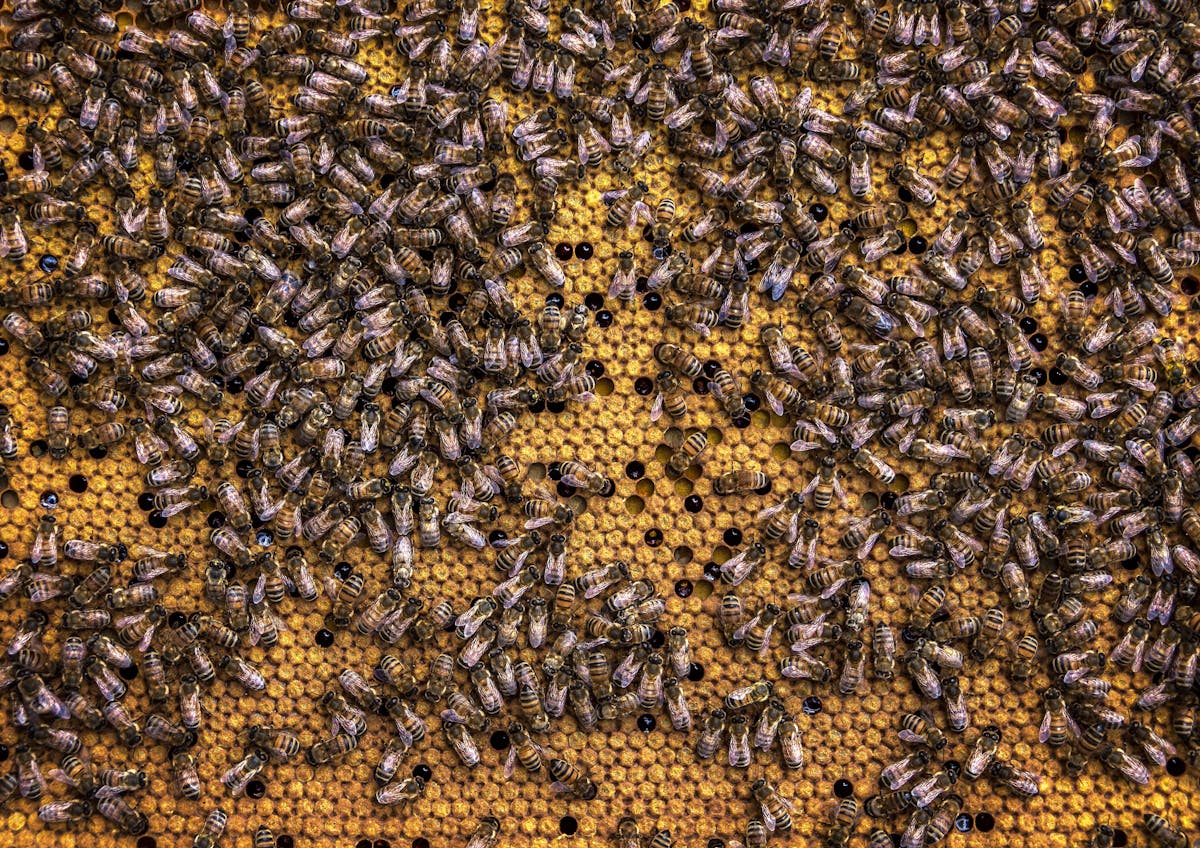
Honey bee swarm season catches most people off guard. You step outside on a warm spring afternoon and find a buzzing, football-sized cluster of bees hanging from a tree branch, a fence post, or the side of your house. The instinct is to panic. The reality is far less dramatic -- and far more fascinating.
Swarming is the only way honey bee colonies reproduce at the organism level. When a hive grows too large for its space, roughly half the colony leaves with the old queen to find a new home. The bees that stay behind raise a new queen and carry on. It is one of the most remarkable events in the insect world, and it happens every spring across North America, including right here in Northern California.
This guide covers the biology behind swarming, the seasonal timeline you can expect, exactly what to do if you encounter a swarm as a homeowner, and step-by-step instructions for beekeepers who want to catch one. We also cover prevention strategies for beekeepers who would rather keep their colonies intact.
Why Do Honey Bees Swarm?
Swarming is not a sign that something went wrong. It is the opposite -- a thriving colony that has outgrown its home.
When a colony reaches peak population in spring (typically 40,000 to 60,000 bees), worker bees begin preparing to divide. The triggers are straightforward:
- Overcrowding. Too many bees in too little space reduces airflow and makes it difficult for the queen's pheromones to reach every worker.
- Abundant resources. Strong nectar flows and pollen availability in spring give colonies the energy and nutrition to split successfully.
- Queen pheromone dilution. As the colony grows, the queen's pheromone signal weakens in the outer reaches of the hive. Workers interpret this as a cue to raise a new queen.
- Genetics. Some bee lineages are more swarm-prone than others. Italian bees (Apis mellifera ligustica), the most common managed race in the U.S., tend to build up rapidly and swarm readily.
Once the colony commits to swarming, workers build queen cells along the bottom edges of frames. The old queen lays eggs in these cells, and the workers feed the developing larvae a diet of pure royal jelly.
About eight days before the new queens emerge, the old queen and roughly half the workforce leave the hive in a dramatic cloud of bees.
The Swarm's First Stop: The Bivouac
The departing swarm does not fly directly to a new home. Instead, they land within 15 to 100 meters of the original hive and form a temporary cluster called a bivouac -- the classic "ball of bees" people find hanging from tree branches.
Scout bees then fan out to search for suitable nesting cavities. They return to the cluster and perform waggle dances to communicate the location, direction, and quality of potential sites. Through a process that researchers at Cornell University have compared to democratic decision-making, scouts debate and gradually converge on the best option. The whole process typically takes 24 to 72 hours, though some swarms decide within hours and others linger for days.
Pro Tip: A swarm resting in a bivouac is at its most docile. The bees have no home, no brood, and no honey stores to defend. They have gorged on honey before leaving the original hive, making them calm and heavy. This is the safest and easiest window for capture.
When Is Honey Bee Swarm Season?
Swarm season varies by climate and region, but the general pattern across the United States follows a predictable calendar.
Swarm Season Timeline by Region
| Region | Primary Swarm Season | Peak Month | Notes |
|---|---|---|---|
| Southern California, Gulf States | February - April | March | Warm winters trigger early buildup |
| Northern California, Mid-Atlantic | March - May | April | Follows first major nectar flows |
| Pacific Northwest, Upper Midwest | April - June | May | Later springs delay colony expansion |
| Mountain West, Northern Plains | May - July | June | Short season, intense when it hits |
In Northern California specifically, swarm season typically begins in mid-March as wildflower blooms ramp up and temperatures consistently reach the mid-60s Fahrenheit. Peak swarming occurs in April, and the season tapers off by late May -- though secondary "afterswarms" from the same colony can occur into June.
What Triggers the Seasonal Timing?
Three environmental factors converge to set the swarming clock each year:
- Day length. Increasing photoperiod in late winter stimulates the queen to ramp up egg-laying, accelerating colony growth.
- Temperature. Consistent daytime highs above 60 degrees F allow foragers to fly, which brings in the nectar and pollen that fuel rapid expansion.
- Nectar flow. The availability of blooming flowers -- particularly California native wildflowers, fruit tree blossoms, and early clovers -- provides the caloric surplus colonies need to split.
California Pollinator Garden Guide
What to Do If You Find a Bee Swarm (For Homeowners)
Finding a swarm on your property is startling but rarely dangerous. Here is what to do -- and what not to do.
Step 1: Stay Calm and Keep Your Distance
A swarm is not aggressive. The bees have nothing to protect. Give them at least 10 to 15 feet of clearance, keep children and pets away, and observe from a safe distance. You are witnessing one of nature's most sophisticated collective decisions in real time.
Step 2: Identify What You Are Looking At
Not every cluster of bees is a swarm. Understanding the difference matters:
- Swarm: A temporary, exposed cluster of bees (no comb) hanging from a branch, post, wall, or other surface. Will move on within hours to days.
- Established colony: Bees with visible wax comb inside a wall void, tree hollow, or structure. This is a permanent nest, not a swarm.
- Wasps or hornets: Paper-like nest material, narrow waists, smooth bodies. Not bees at all.
If you are dealing with an established colony inside a structure, that requires a professional cutout -- a different and more involved process than swarm capture.
Step 3: Contact a Local Beekeeper
Most beekeepers will collect a swarm for free because free bees are a gift. To find a beekeeper near you:
- Call your county beekeeping association (most maintain swarm hotlines in spring)
- Search "swarm removal" plus your city on social media
- Contact your local agricultural extension office
- Check the American Beekeeping Federation's directory at abfnet.org
Step 4: Do NOT Spray Them
Never spray a swarm with insecticide, water, or anything else. Spraying agitates bees that were otherwise peaceful, increases the risk of stings, and kills pollinators that are essential to local agriculture and ecosystems. In many California counties, honey bees are protected to some degree, and destroying a swarm may violate local ordinances.
If the swarm is in a location that poses no immediate safety concern, the simplest option is to wait. Most swarms depart within 24 to 48 hours once scouts find a new home.
How to Catch a Bee Swarm (For Beekeepers)
Catching a swarm is one of the most rewarding experiences in beekeeping. Free bees, local genetics, and a colony that is primed to build comb and grow. Here is the step-by-step process.
Equipment You Will Need
Before swarm season starts, prepare a capture kit and keep it ready to go:
- A standard deep hive body (10-frame or 8-frame)
- Bottom board and outer cover
- 5 to 7 frames with foundation (remove a few to create space)
- A white bed sheet or tarp
- A spray bottle filled with sugar water (1:1 ratio)
- Bee brush (soft-bristle)
- Pruning shears or loppers (for branch-mounted swarms)
- Bee veil and gloves (minimal protection is fine for swarms)
- A ratchet strap or screen to secure the box for transport
Beekeeping Equipment & Supplies Checklist
Step-by-Step Swarm Capture
1. Assess the swarm location. If the cluster is on a low branch (under 10 feet), capture is straightforward. If it is 20+ feet up, on a structure, or inside a wall cavity, the difficulty increases significantly. Only attempt captures you can do safely.
2. Set up your hive box below the swarm. Place the bottom board on a flat surface directly beneath the cluster. Remove the outer cover and 3 to 4 frames to create an open cavity.
3. Lightly mist the swarm with sugar water. This weighs down the bees slightly and reduces flight activity. Do not drench them -- a light mist is sufficient.
4. Shake or lower the bees into the box. For branch-mounted swarms, hold the branch directly over the open hive body and give it one firm, decisive shake. The cluster will drop into the box as a single mass. For wall or post swarms, use a bee brush to gently scoop bees into the box.
5. Watch for the queen. If the queen landed in the box, you will see worker bees fanning at the entrance with their abdomens raised, releasing Nasonov pheromone to signal "home is here." This is the best sign of a successful capture.
6. Replace the frames and cover. Once the majority of bees are in the box, gently slide the remaining frames back in and place the outer cover on top, leaving the entrance open.
7. Wait until dusk. Do not move the box immediately. Leave it in place until evening so that all flying scouts and foragers return to the cluster. Once flight activity stops, secure the entrance with a screen and transport the hive to its permanent location.
Pro Tip: Adding a single frame of open brood from an existing colony to your swarm box dramatically increases retention. Bees will not abandon brood. The presence of larvae switches the colony from "house-hunting mode" to "homeowner mode" almost immediately.
What to Do After the Catch
The first week after hiving a swarm is critical:
- Do not inspect for 5 to 7 days. Let the colony settle, build comb, and let the queen begin laying.
- Feed 1:1 sugar syrup. Swarms have no stored resources. An internal feeder with sugar syrup gives them the energy to draw comb rapidly.
- Check for a laying queen after one week. Look for eggs (tiny grains of rice standing upright in cells). If you see eggs, the colony is established.
- Monitor for varroa mites within the first month. Swarms can carry mites from their original colony. An alcohol wash at the 30-day mark gives you a baseline mite count.
Swarm Prevention: How Beekeepers Keep Colonies Intact
Not every beekeeper wants their colonies to swarm. Losing half your bees means a weaker remaining colony, reduced honey production, and the risk that the swarm lands somewhere problematic. Here are the primary prevention strategies.
1. Give the Colony Space Before They Need It
Add supers (additional hive boxes) proactively in early spring rather than waiting for the colony to feel crowded. A good rule of thumb: when 7 of 10 frames are drawn and covered with bees, add the next box.
2. Perform Regular Inspections During Swarm Season
Check every 7 to 10 days from March through May for queen cells along the bottom bars of frames. Our hive inspection checklist walks you through what to look for during each visit. If you find capped queen cells, the colony has already committed to swarming -- removing the cells alone usually will not stop them.
3. Make Splits (Artificial Swarms)
The most reliable prevention method is to do what the bees want to do, but on your terms. Take a few frames of brood, bees, and a queen cell (or introduce a mated queen) and place them in a new hive box. This relieves congestion and channels the swarming impulse into a controlled expansion of your apiary.
4. Ensure Adequate Ventilation
Screened bottom boards, upper entrances, and proper hive spacing all reduce congestion signals inside the colony.
5. Requeen Annually with Low-Swarm Genetics
Some queen breeders select specifically for low swarming tendency. Annual requeening also ensures a young, vigorous queen whose strong pheromone output suppresses the swarming impulse. If you want to raise your own queens from your best colonies, our queen rearing for beginners guide covers the fundamentals.
The Biology of Swarming: What Happens Inside the Hive
Understanding the internal timeline helps beekeepers anticipate and manage swarming effectively.
The 16-Day Countdown
From the moment the queen lays an egg in a queen cup to the day the new virgin queen emerges, the timeline is approximately 16 days:
- Day 1-3: Egg stage. The queen lays a fertilized egg in a queen cup built by workers.
- Day 4-8: Larval stage. Workers feed the developing larva exclusively with royal jelly. The cell is drawn out into the characteristic peanut-shaped queen cell.
- Day 8: Cell is capped. Workers seal the queen cell with wax.
- Day 8-9: The prime swarm departs. The old queen and roughly 50-70% of the workers leave the hive. This typically happens on a warm, calm day between 10 AM and 2 PM.
- Day 9-16: The virgin queen completes development inside the capped cell.
- Day 16: The first virgin queen emerges. She may fight or "pipe" to kill rival queens still in their cells.
- Day 20-24: The virgin queen takes mating flights, mates with 12-20 drones in midair, and returns to begin laying.
Why Timing Matters for Beekeepers
If you find queen cells during an inspection, the stage of those cells tells you where you are in the countdown:
- Open queen cells with larvae: You have approximately 5 to 7 days before a swarm departs. There is still time to make a split or take other preventive action.
- Capped queen cells: The swarm may depart at any time -- possibly within hours. At this stage, the most effective response is to make a split using the queen cells rather than destroying them.
- Empty torn-open queen cells: A queen has already emerged. The swarm has either already left or did not materialize.
Swarm Myths vs. Facts
Misinformation about swarming causes unnecessary fear and, worse, leads people to kill bees that pose no threat. Here are the most common myths corrected.
Myth: Bee swarms are dangerous and will attack. Fact: Swarms are the least defensive state a honey bee colony can be in. They have no home, brood, or honey to protect. Unprovoked stinging from a swarm is extremely rare.
Myth: A swarm means bees are sick or dying. Fact: Swarming is a sign of a healthy, vigorous colony with strong genetics and abundant resources. Weak or diseased colonies rarely have the population to swarm.
Myth: Spraying a swarm with water will make it leave. Fact: Spraying agitates bees and can trigger defensive behavior. It also harms pollinators that are vital for agriculture and local ecosystems.
Myth: If you leave a swarm alone, it will build a hive in your wall. Fact: A bivouac swarm is temporary. The bees will leave once scouts find a suitable cavity -- usually within 24 to 72 hours. However, if there is an open cavity in your structure (a hole in siding, an uncapped chimney), they may move in. Sealing entry points before swarm season is the best prevention.
Myth: You need professional exterminators for bee swarms. Fact: A local beekeeper can capture and relocate a swarm at no cost. Extermination should never be the first option for honey bees.
How Swarms Benefit Bee Conservation
In an era when managed honey bee colonies are losing 30-50% of their population annually, swarms represent natural colony multiplication -- the mechanism bees have used for millions of years to maintain and expand their numbers.
Every swarm that is caught by a beekeeper and hived becomes a new managed colony with locally adapted genetics. These bees are already acclimated to your region's climate, flora, and disease pressures, which often makes them more resilient than imported package bees.
Supporting swarm capture programs in your community is one of the most direct ways to support bee conservation without spending a dollar.
For homeowners who want to help bees year-round -- even if a swarm never lands in their yard -- there are plenty of practical steps. Planting bee-friendly flowers and herbs provides forage that keeps local colonies strong enough to produce healthy swarms in the first place.
Frequently Asked Questions About Honey Bee Swarms
Are honey bee swarms dangerous to people and pets?
No. Swarming bees are gorged with honey and have no nest to defend, making them remarkably docile. Keep a respectful distance (10-15 feet), keep pets away, and observe safely. Unprovoked stinging from a resting swarm is exceptionally rare.
How long will a bee swarm stay in one spot?
Most swarms depart their temporary resting site within 24 to 72 hours once scout bees agree on a permanent home. Some swarms, particularly in cool or rainy weather, may stay 3 to 5 days. If the swarm has been in place for more than a week and you see wax comb being built, they may be establishing a permanent colony.
Can I keep a swarm I find in my yard?
In most areas, yes -- if you are set up to house them. You will need at minimum a hive body, frames, bottom board, and cover. If you have never kept bees before, contact a local beekeeper or beekeeping association to help you hive the swarm properly. If beekeeping interests you, our beginner's guide to beekeeping covers everything you need to get started, and our Complete Beekeeper course walks you through the process with hands-on video instruction.
What time of day do bees usually swarm?
Swarms most commonly issue from the hive between 10 AM and 2 PM on warm, calm, sunny days. This timing gives the swarm several hours of daylight to find a temporary resting spot and begin scouting for a permanent home before nightfall.
How can I prevent bees from swarming out of my hive?
The most effective prevention methods are providing adequate space before the colony needs it, performing inspections every 7-10 days during swarm season, making controlled splits to relieve congestion, maintaining good hive ventilation, and requeening annually with queens bred for low swarming tendency. No single method is foolproof -- swarming is deeply encoded in honey bee biology.
Do all types of bees swarm?
Only social bees that live in large colonies swarm. Honey bees (Apis mellifera) are the most well-known swarmers. Most of the 4,000+ native bee species in North America are solitary and do not form colonies or swarms. Learn more about the differences in our native bees vs. honeybees guide.
Start Your Beekeeping Journey This Swarm Season
Swarm season is the best time to begin beekeeping. Colonies caught in spring have the entire growing season ahead of them to build comb, store honey, and prepare for winter. And catching a swarm is, hands down, the most exciting way to start.
If you are ready to go from swarm-curious to hive-confident, the NorCal Nectar Complete Beekeeper course covers everything from first hive setup through your first honey harvest -- taught by a 4th-generation beekeeper with over 130 years of family expertise behind the curriculum. Pair it with our beekeeping equipment checklist to make sure you have exactly what you need and nothing you don't.
Already a beekeeper? Explore our California raw honey harvested from our own Northern California hives -- the same hives we manage with the sustainable practices discussed throughout this guide.
Spring will not wait, and neither will the bees.
Learn Beekeeping the Northern California Way
Eight written modules built around Northern California seasons — first inspection through first harvest, with printable checklists.
Keep reading
Beekeeping & Sustainability
How to Start Beekeeping: The Complete Beginner's Guide to Your First Hive
Colony losses hit a record 55.6% in 2024-2025, making new beekeepers more important than ever. This step-by-step guide covers everything from equipment and hive selection to seasonal management and first-year mistakes, so you can start your first hive with confidence.
Beekeeping & Sustainability
How Bees Make Honey: The Complete Science Behind Every Drop
A single jar of honey represents 2.5 million flower visits and the coordinated labor of tens of thousands of bees. Here is the complete science of how bees transform dilute flower nectar into one of nature's most stable, nutrient-rich foods.
Beekeeping & Sustainability
What Makes Beekeeping Sustainable? Practices That Protect Bees and Ecosystems
Sustainable beekeeping prioritizes colony health over maximum honey yields. This guide covers chemical-free management, genetic diversity, habitat preservation, and how to identify responsibly sourced honey from beekeepers who put bees first.
Beekeeping & Sustainability
Bee Friendly Plants: 25 Best Flowers and Herbs to Grow for Pollinators
Bees lost over 60% of U.S. commercial colonies in a single year, and habitat loss is a primary driver. This guide covers the 25 best bee friendly plants -- flowers, herbs, shrubs, and trees -- organized by bloom season, with planting tips and a garden layout that keeps pollinators fed from early spring through late fall.