
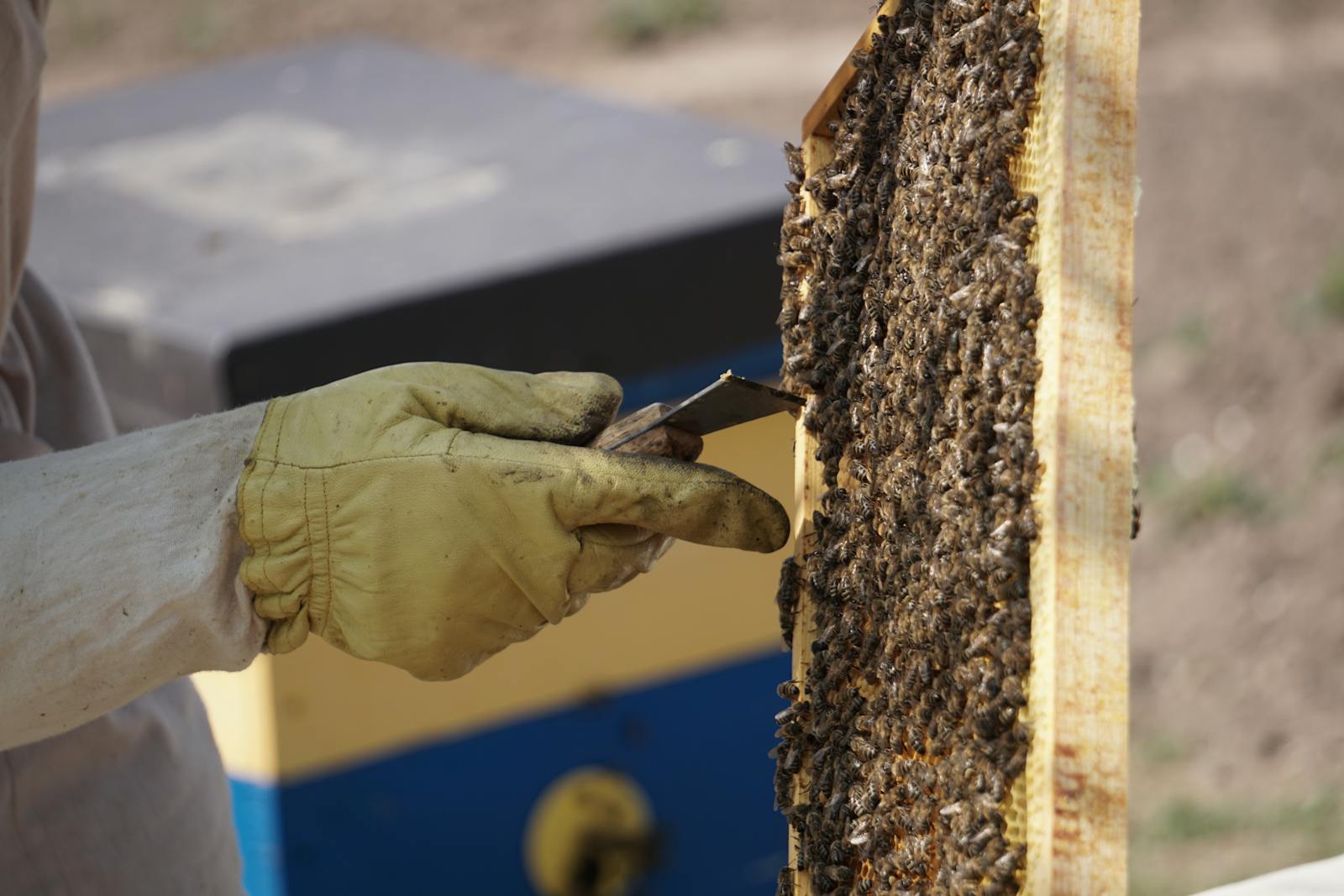
Live bee removal is the process of physically relocating a honey bee colony from a structure or unwanted location to a managed hive, instead of killing it with pesticides. In most U.S. cities, including Sacramento and across Northern California, live removal is now the default option for homeowners who find a swarm or established colony on their property -- and in many cases, it costs the same or less than extermination.
If you have just discovered a buzzing cluster on your eaves, a hum coming from inside a wall, or bees streaming in and out of a soffit vent, you have a choice to make. Spray and kill, or call a beekeeper. This guide explains what each option actually involves, what it costs in 2026, what the law says in California, and how to tell the difference between a 30-minute swarm pickup and a $1,500 wall cutout.
Quick Answer: When to Choose Live Bee Removal
Live bee removal is the right call in nearly every honey bee scenario. Here is the short version:
- Honey bee swarm hanging from a tree, fence, or wall (no comb visible): Free or low-cost pickup by a local beekeeper, usually within 24 hours.
- Established honey bee colony inside a wall, attic, soffit, or shed: Live cutout by a specialist, typically $400 to $1,500 depending on access.
- Honey bee colony in a tree cavity that does not threaten anyone: Often best left alone -- bees are pollinators, not pests.
- Africanized bees, anaphylaxis risk, or active aggression at a school or hospital: Some situations may require an exterminator licensed for bee work, but live removal should still be the first call.
- Wasps, hornets, or yellow jackets: Not bees. Different problem, different solution.
The only time extermination is genuinely warranted is when a licensed professional confirms the colony is Africanized and poses an immediate medical threat, or when access for live removal is structurally impossible. Even then, ask twice.
What Is Live Bee Removal?
Live bee removal is the controlled relocation of a honey bee colony or swarm to a beekeeper's apiary. Instead of killing the bees, the removal specialist captures the queen, transfers the comb and brood into a hive box, and gives the colony a second chance in a managed setting where it can pollinate crops, produce honey, and replace some of the colonies lost to colony collapse and pesticide exposure.
There are three core methods, and the right one depends entirely on where the bees are.
1. Swarm Pickup (The Easy One)
A swarm is a temporary cluster of bees, usually hanging from a branch, mailbox, fence post, or the side of a house. There is no comb, no honey, and no brood -- just the queen and her bodyguard of workers, gorged on honey and waiting for scouts to find a new home.
Swarm pickups are the simplest form of live bee removal. A beekeeper arrives with a hive box, shakes or brushes the cluster into the box, waits for stragglers to follow the queen's pheromone, and drives away. Total time on site: 30 to 90 minutes. Cost: usually free, because free bees are valuable to a beekeeper.
If you find a swarm, see our honey bee swarm season guide for what to do in the first 30 minutes -- the window when capture is easiest.
2. Cutout (The Wall, Soffit, or Attic Job)
A cutout is what happens when the bees have moved into a structure and built comb. This is the most involved form of live bee removal. The specialist locates the colony with thermal imaging, opens the wall or ceiling, removes the comb in sections, ties brood comb into empty frames with rubber bands, vacuums the bees gently into a holding box, and finds the queen.
After the bees are out, the cavity has to be cleaned of all wax and honey (otherwise scout bees will smell it and a new swarm will move in within weeks), then sealed and repaired.
Cutouts take three to eight hours and require the right insurance, the right vacuum, and the right access plan. This is not a DIY job.
3. Trap-Out (The No-Cut Option)
When the colony is in a location that cannot be opened -- a stone chimney, a thick masonry wall, a 60-foot pine -- a trap-out is the alternative. The specialist installs a one-way cone over the entrance. Bees can leave to forage but cannot return. After three to six weeks, the colony has either starved or absconded, and a "bait hive" placed nearby usually catches the orphaned foragers.
Trap-outs are slower, less reliable, and do not always save the queen and brood. They are a last resort when a cutout is not feasible.
Pro Tip: If a removal company offers to "spray and seal" the entrance, walk away. That is extermination disguised as removal. Dead bees inside a wall rot, attract secondary pests like wax moths and small hive beetles, and leave 40+ pounds of honey to liquefy and seep through drywall in summer heat.
Live Bee Removal vs Extermination: Side-by-Side
The choice between the two often comes down to four things: cost, time, mess, and conscience. Here is how they compare.
| Factor | Live Bee Removal | Extermination |
|---|---|---|
| Typical cost (swarm) | Free to $150 | $200 to $400 |
| Typical cost (wall colony) | $400 to $1,500 | $300 to $800 |
| Time on site | 1 to 8 hours | 30 to 60 minutes |
| Repair work included | Sometimes (specialty firms) | No |
| Comb and honey removed | Yes | No (left to rot) |
| Risk of secondary infestation | Low if cavity is sealed | High (rotting honey attracts pests) |
| Future swarm attraction | Eliminated | High (pheromones remain) |
| Pollinator impact | Saved colony, often productive | Total loss, neighbor hives at risk |
| Legal status (most CA cities) | Encouraged or required first option | Restricted by ordinance in some areas |
| Insurance liability | Removal companies carry $1M+ coverage | Pest control may not cover structural damage |
The "extermination is cheaper" myth usually falls apart when you account for the dead-bee aftermath. A 40,000-bee colony with 30 pounds of honey trapped inside a south-facing wall in July is a structural and sanitation problem that costs far more to remediate than the original removal would have cost.
How Much Does Live Bee Removal Cost in 2026?
Pricing varies by region, accessibility, and colony size, but the ranges below reflect what U.S. homeowners are paying right now. Northern California sits in the middle of the national range, with most reputable Sacramento-area beekeepers charging by job complexity rather than by the hour.
Cost Breakdown by Removal Type
| Removal Type | Low | Typical | High | What Drives the Price |
|---|---|---|---|---|
| Swarm pickup (low, accessible) | Free | $50 | $150 | Travel time, season, beekeeper demand |
| Swarm pickup (high or tricky) | $100 | $200 | $350 | Ladder work, bucket trucks |
| Wall cutout (single story) | $300 | $600 | $1,200 | Wall material, comb size, repairs |
| Attic or soffit cutout | $500 | $900 | $1,500 | Access, heat, full-suit time |
| Two-story or roof cutout | $800 | $1,400 | $2,500 | Scaffolding, safety, permits |
| Trap-out (no cut) | $400 | $700 | $1,200 | Multiple visits over 4 to 6 weeks |
| Tree colony relocation | $400 | $800 | $1,800 | Cavity opening or full tree removal |
What Increases the Cost
Several factors push a removal job from the low end of the range toward the high end:
- Multi-story access. Anything above 12 feet usually requires ladders, scaffolding, or a bucket truck.
- Comb age and size. A colony that has been in the wall for two seasons may have 40+ pounds of comb and honey to remove.
- Repair scope. Some specialists handle drywall and stucco repair in-house. Others leave it to your contractor.
- Time of year. Removals during a strong nectar flow are easier and cheaper because the bees are docile and full of honey.
- Africanized risk zones. In southern California, Arizona, and parts of Texas, the additional protective measures and disposal protocols add 20 to 40 percent.
What Reduces the Cost
- Catching it as a swarm before they move in. A swarm pickup is 5 to 10 times cheaper than a cutout from the same property a week later.
- Posting in local beekeeping groups. Many hobbyists will do simple removals at cost in exchange for the bees.
- Bundling with planned construction. If you are already opening a wall for renovation, a beekeeper can remove the colony for a fraction of the price.
Why Live Removal Beats Extermination, Every Time
There are three reasons live bee removal has become the default in modern pest management, and each one matters whether you care about pollinators, your wallet, or your house.
1. Bees Are in a Long-Term Crisis
U.S. beekeepers reported losing 55.1 percent of their managed honey bee colonies between April 2024 and April 2025, according to the Bee Informed Partnership's annual Loss and Management Survey -- one of the worst years on record. Commercial beekeepers in particular reported catastrophic losses, with some operations down 70 percent or more heading into the 2025 almond pollination season in California.
Honey bees pollinate roughly one-third of the food eaten in the United States, and California's $11 billion almond industry alone depends on nearly 2 million honey bee colonies trucked in each February. Every colony saved through live removal is one fewer that needs to be replaced through expensive package or queen imports.
For more on the broader picture, see our deep-dive on colony collapse crisis 2026.
2. Extermination Doesn't Solve the Underlying Problem
Spraying a colony inside a wall kills the adult bees but leaves the comb, honey, and pheromone signature behind. Within weeks, scout bees from a new swarm find the empty cavity, smell the residual queen pheromones, and move right in. Homeowners who go the spray route often pay for two or three more treatments over the following two years.
Live removal eliminates the attractant entirely. When the comb and honey are gone and the cavity is sealed properly, future swarms have no reason to investigate.
3. The Mess After Extermination Is Real
A medium honey bee colony contains 30 to 60 pounds of comb, honey, and brood. When the bees die, that biomass starts to break down. Within 7 to 14 days, the honey ferments, the brood liquefies, and the resulting slurry begins to seep through drywall, stucco, and ceilings.
The smell is unmistakable. Wax moths and small hive beetles arrive next. Mice and rats follow. In hot months, melting honey can stain walls 6 to 8 feet down from the original colony location and require full drywall replacement.
Pro Tip: A common Sacramento scenario: bees move into a south-facing soffit in spring, an exterminator sprays in June, and by August the homeowner is calling a contractor about $4,000 in stained ceiling and structural damage. The original live removal would have run $700.
Is It Legal to Kill Bees? California and Beyond
Honey bees themselves are not federally protected, but a growing number of cities and counties have passed ordinances that restrict or discourage extermination as a first response.
California Snapshot (2026)
California does not list honey bees as endangered, but the state encourages live removal through its registered beekeeper program and apiary protection laws. Several local jurisdictions go further:
- Los Angeles maintains an active "Save Our Bees" hotline through the LA Beekeepers Association and discourages extermination contracts on city property.
- San Francisco requires structural pest control operators to attempt live removal first when feasible.
- Sacramento County does not mandate live removal but actively promotes it through the UC Davis Cooperative Extension and local beekeeping clubs.
- San Diego County allows extermination only after live removal has been attempted or determined infeasible by a licensed beekeeper.
If you keep bees yourself, registration with your county agricultural commissioner is required in California. Our California beekeeping laws and registration guide covers the full process.
Other States Worth Knowing
- Florida, Texas, Arizona: Africanization concerns mean live removal is more selective; certified bee removal specialists are typically required.
- New York, Massachusetts, Oregon, Washington: Strong pollinator protection laws; many cities prohibit extermination of honey bees on public property without justification.
- Colorado, Utah, Idaho: Beekeeper-led removal networks are well established and pricing is competitive.
What Happens During a Live Removal: The Full Walkthrough
Knowing what to expect makes the entire process smoother. Here is how a typical wall cutout unfolds, start to finish.
Step 1: Phone Consultation and Quote (Day 1)
Most reputable removal specialists begin with a 15-minute phone call. Expect to be asked:
- Where is the colony located on the structure?
- How long have the bees been there?
- How much activity do you see at the entrance per minute?
- Can you send a video of the entrance and a photo of the wall from inside and outside?
- What is the wall material? (drywall, plaster, stucco, brick, wood siding)
- Is the area accessible by ladder or scaffolding?
Based on this, you will get a quote range. Final pricing is usually confirmed on site.
Step 2: Site Visit and Thermal Imaging (Day 1 to 7)
The specialist arrives with a thermal camera and confirms the exact size and location of the colony. A medium colony shows up as a clear hot spot inside the wall cavity, especially in early morning. Pricing is finalized.
Step 3: Removal Day Setup
On removal day, expect:
- Drop cloths and plastic sheeting to protect floors and furniture
- Smoker and bee suits (the homeowner is asked to stay inside or leave the property)
- A bee vacuum (low suction, padded chamber -- not a shop vac)
- Rubber bands, frames, and a hive box for the relocated colony
- Hand tools, reciprocating saw, or stucco cutter depending on wall type
Step 4: Opening and Removal (2 to 5 hours)
The specialist opens the wall in a controlled cut, exposes the comb, and removes it in sections. Brood comb (the comb containing developing bees) is rubber-banded into empty frames and placed in the hive box. Honey comb is set aside for collection.
Adult bees are gently vacuumed into a holding chamber. The queen is identified and either caged briefly or released into the hive box to draw the colony in.
Step 5: Cleanup and Cavity Treatment
All comb, honey, and propolis residue is removed. The cavity is wiped down with a citrus-based cleaner (bees dislike citrus) and any obvious entry points are sealed. Insulation is replaced if it was removed.
Step 6: Repairs
Depending on the contract, the removal company either patches the opening or coordinates with a contractor. Some specialists offer turn-key drywall and stucco repair as an add-on; others leave a clean opening for your handyman.
Step 7: 24 to 48 Hour Follow-Up
The hive box stays on site overnight so foraging bees returning to the original entrance can find the queen and join the relocated colony. The specialist returns the next morning to collect the box and transport the bees to their new apiary.
A reputable specialist also schedules a 2-week and 6-month check-in to confirm no new swarm has moved in.
How to Find a Reputable Live Bee Removal Specialist
Not every "bee guy" with a Facebook page is qualified for structural removal. Here is how to vet one.
Five Questions to Ask Before Hiring
- Are you a registered beekeeper in this county? In California, this is a one-page form with the county ag commissioner. A "no" is a red flag.
- Do you carry general liability insurance? Cutouts open structures. A serious specialist carries at least $1 million in liability coverage.
- What happens to the bees after you leave my property? The right answer involves their apiary, a treatment-yard for varroa, and integration with their existing hives. The wrong answer is "I sell them to whoever wants them."
- What is your repair scope, and is it included in the quote? Get this in writing before any cuts are made.
- Can I see photos or videos of past cutouts? Experienced specialists have a portfolio. Beginners usually do not.
Where to Find Specialists in Your Area
- Local beekeeping associations. Most counties have a club with a swarm and removal hotline. The Sacramento Area Beekeepers Association maintains an active list every spring.
- University extension offices. UC Davis, UC Riverside, and other land-grant universities maintain referral networks for honey bee research and removal.
- The American Beekeeping Federation. abfnet.org lists members by region.
- Honey Bee Removal directories. Sites like Save the Bees Removal and Bee Removal Source list specialists by zip code.
- Local NextDoor and Facebook beekeeping groups. Often the fastest way to find a hobbyist for a free swarm pickup.
Red Flags to Avoid
- "We just kill them and seal the hole" (not removal)
- No proof of insurance
- Cash only, no invoice
- Quotes given without seeing the property or a photo
- Pressure to decide within minutes
- Refuses to explain what happens to the bees afterward
DIY vs Hiring a Professional
A small share of homeowners can handle a swarm pickup themselves if they already have beekeeping experience or are about to start. The cost-benefit is straightforward.
When DIY Makes Sense
- The swarm is on a low branch (under 8 feet)
- You already own a hive box, frames, and a veil
- The cluster is the size of a basketball or smaller
- The location is on your own property, not a neighbor's
In that scenario, a swarm pickup is a 30-minute exercise that gives you free bees and a head start on a new colony. Our how to start beekeeping beginners guide walks through what you need.
When DIY Is a Bad Idea
- The colony is inside a wall, attic, or roof
- You do not own protective equipment
- The cluster is over 10 feet up
- Anyone in the household has a known bee allergy
- The colony shows defensive behavior (multiple stings on approach)
Cutouts in particular require specialty insurance, a bee vacuum, structural skills, and the willingness to repair what you cut open. The $700 you save by attempting it yourself disappears the first time you fall off a ladder or punch a 3-foot hole through stucco.
If you do get stung, see our bee sting treatment guide for first-aid steps and when to seek emergency care.
Mini Case Study: A Sacramento Soffit Removal
A homeowner in East Sacramento noticed a steady stream of honey bees entering a third-floor soffit vent in late April. The activity had been there about three weeks. The exterminator she initially called quoted $350 to spray, plus an open-ended bid for whatever cleanup the colony required afterward.
She instead called a local beekeeper through the Sacramento Area Beekeepers Association swarm list. The beekeeper used a thermal camera to confirm the colony was about the size of a basketball -- roughly 15,000 bees, with new comb only a few weeks old.
Total cost of the live removal: $625, including a small drywall patch on the interior side of the soffit. Time on site: 4 hours. The beekeeper carried the colony home that evening, integrated it into their apiary by the following weekend, and the homeowner has had zero bee activity at the soffit in the two seasons since.
The key was timing. Catching the colony in its first month meant less comb, less honey, and a faster, cheaper job. Waiting until July would have likely doubled the price and added serious risk of honey damage to the ceiling below.
How to Prevent Bees from Moving In Next Year
Once the bees are gone, the goal is to keep new ones from finding the same spot. Bees prefer cavities of about 40 liters (roughly the size of a five-gallon bucket) with a small entrance, southern or eastern exposure, and any trace of beeswax inside.
Annual Prevention Checklist
- Walk the perimeter of the house every February before swarm season starts
- Seal any opening larger than a quarter-inch in soffits, fascia, and around utility penetrations
- Install hardware cloth (1/8 inch mesh) over attic and gable vents
- Cap chimneys with a proper bee-resistant screen
- Remove any obvious wax or comb residue from previous colonies
- Trim vegetation away from soffits and eaves to reduce shaded resting spots for swarms
- Consider a "decoy" swarm trap on a tree at the property edge -- bees will choose the easier cavity over your wall
These same steps support pollinator habitat without inviting unwanted nesting. If you want to actively help bees while keeping them out of the structure, our how to help bees at home guide covers the easiest changes that move the needle.
How Buying Local Honey Supports Live Removal
Most live bee removal specialists are local beekeepers first. Their main income comes from honey, beeswax, pollination contracts, and queen sales -- removal pays the truck and insurance, but the apiary pays the rent.
When you buy raw, local honey from a Northern California beekeeper, you are directly funding the network of people who pick up the phone at 7 a.m. when a swarm lands on a school playground. Our supporting bee conservation guide breaks down which purchases actually move the needle for pollinator health.
If you live in the Sacramento area and want honey from the same beekeepers who do live removals across the region, NorCal Nectar's raw honey collection sources directly from family apiaries that recover and re-home colonies every spring.
Frequently Asked Questions
How much does live bee removal cost?
Live bee removal costs range from free for a simple swarm pickup to $1,500 or more for a complex wall cutout. Most homeowners pay between $400 and $900 for a residential cutout in 2026. Pricing depends on access, colony size, wall material, and whether repairs are included.
How long does live bee removal take?
A swarm pickup takes 30 to 90 minutes on site. A wall cutout takes 3 to 8 hours, plus an overnight stay for the hive box so foraging bees can find the queen. Trap-outs span 4 to 6 weeks because the colony has to deplete naturally through the one-way cone.
Will bees come back after live removal?
Properly executed live removal, where all comb and honey is removed and the cavity is sealed, has a very low return rate. Extermination, by contrast, leaves pheromones and wax behind that attract new swarms within months. The single most important step is removing the comb, not killing the bees.
Is bee removal covered by homeowners insurance?
Most homeowners insurance policies do not cover bee removal itself, but they may cover resulting structural damage from a colony or from extermination aftermath. Check your policy's "vermin" or "infestation" exclusions. Some specialty policies in California do cover removal -- worth a 5-minute call to your agent.
Can you remove bees yourself?
You can remove a low, accessible swarm yourself if you have beekeeping experience, a hive box, and protective equipment. Wall cutouts and structural removals should always be handled by an insured professional. The cost of medical care, repairs, and a failed removal almost always exceeds the savings.
What is the difference between bee removal and extermination?
Live bee removal physically relocates the colony to a managed hive. Extermination uses pesticides to kill the colony in place, leaving the comb and honey behind. Removal is typically the same price or only modestly more expensive, eliminates the structural mess of dead bees, prevents future swarms, and saves a pollinator colony.
Are honey bees protected by law?
Honey bees are not federally listed as endangered, but several states and many cities encourage or require live removal as a first option. California has strong apiary protection laws and a registered beekeeper program. Always check your local ordinance before hiring an exterminator -- in some jurisdictions, killing a healthy honey bee colony without justification is restricted.
How do I know if it is honey bees or wasps?
Honey bees are fuzzy, golden-brown, and stay close to a single entry point with constant traffic in and out. Wasps and yellow jackets are smooth, brightly banded, and often nest in paper combs visible from the outside. Our bumble bees vs honey bees vs carpenter bees guide covers identification in detail.
What time of year is best for bee removal?
Spring (March through May) is the easiest and cheapest time for live removal because colonies are smaller, comb is newer, and bees are docile during nectar flows. Summer removals are more expensive due to larger colonies and more honey. Fall and winter removals are possible but require more planning because the colony is clustered for warmth.
Will the beekeeper charge me if they can't find the queen?
Most reputable specialists charge for the work performed regardless of whether the queen is captured. The colony almost always survives if 60 to 70 percent of the workers and the comb make it to the hive box -- a queen-less colony can raise a new queen from existing brood within a few weeks.
The Bottom Line
Live bee removal is the right answer for nearly every honey bee situation in 2026. It costs about the same as extermination, eliminates the structural mess that comes with killing a colony in place, prevents future swarms from rediscovering the same cavity, and supports the pollinator network that California agriculture depends on.
Before you pick up the phone, take 60 seconds to identify what you are dealing with -- swarm or established colony, honey bees or wasps, accessible or hidden -- and call a registered beekeeper first. Most will give you a free phone consultation, and many will pick up a swarm at no cost in exchange for the bees.
If you keep finding bees on your property year after year, that is a sign of healthy pollinator habitat. Seal the spots you do not want them, support local beekeepers through honey purchases, and treat each call as a small contribution to one of the most important food systems on the planet.
Looking to support pollinators with every jar? Browse NorCal Nectar's raw, single-source honey -- harvested by Northern California beekeepers who rescue colonies as part of their work, every spring.
Learn Beekeeping the Northern California Way
Eight written modules built around Northern California seasons — first inspection through first harvest, with printable checklists.
Keep reading
Beekeeping & Sustainability
Honey Bee Swarm Season: Why Bees Swarm and What to Do
Every spring, millions of honey bee colonies split in half and take flight. Swarming is the natural way bees reproduce at the colony level, yet it remains one of the most misunderstood events in beekeeping. This guide covers the biology behind swarming, the seasonal timeline, what homeowners and beekeepers should do when a swarm appears, and step-by-step instructions for capturing one.
Beekeeping & Sustainability
How to Help Bees at Home (Without Becoming a Beekeeper)
You do not need a hive, a bee suit, or a backyard to help bees. Native bee populations are declining -- 34.7% of U.S. species face extinction risk -- and the most impactful actions happen at home: planting native flowers, eliminating pesticides, and leaving nesting habitat undisturbed. Here are 10 things you can do this week.
Beekeeping & Sustainability
Bumble Bees vs Honey Bees vs Carpenter Bees: Identification Guide for Homeowners
Bumble bees, honey bees, and carpenter bees all buzz through American yards -- but they look different, nest differently, and behave differently. This identification guide breaks down the three most-confused bee groups with comparison tables, inline size-scaled diagrams, nesting behavior charts, and a simple decision flow so you can confidently identify the bee you saw.
Beekeeping & Sustainability
Bee Sting Treatment: First Aid, Remedies & Emergencies
Most bee stings resolve on their own within hours, but knowing the right first aid steps can cut pain and swelling time significantly. This guide covers the correct way to remove a stinger, which home remedies actually work according to medical research, how to tell a normal reaction from a dangerous allergic one, and when to call 911. Whether you are a beekeeper, gardener, or parent, these are the bee sting treatment steps worth memorizing.