
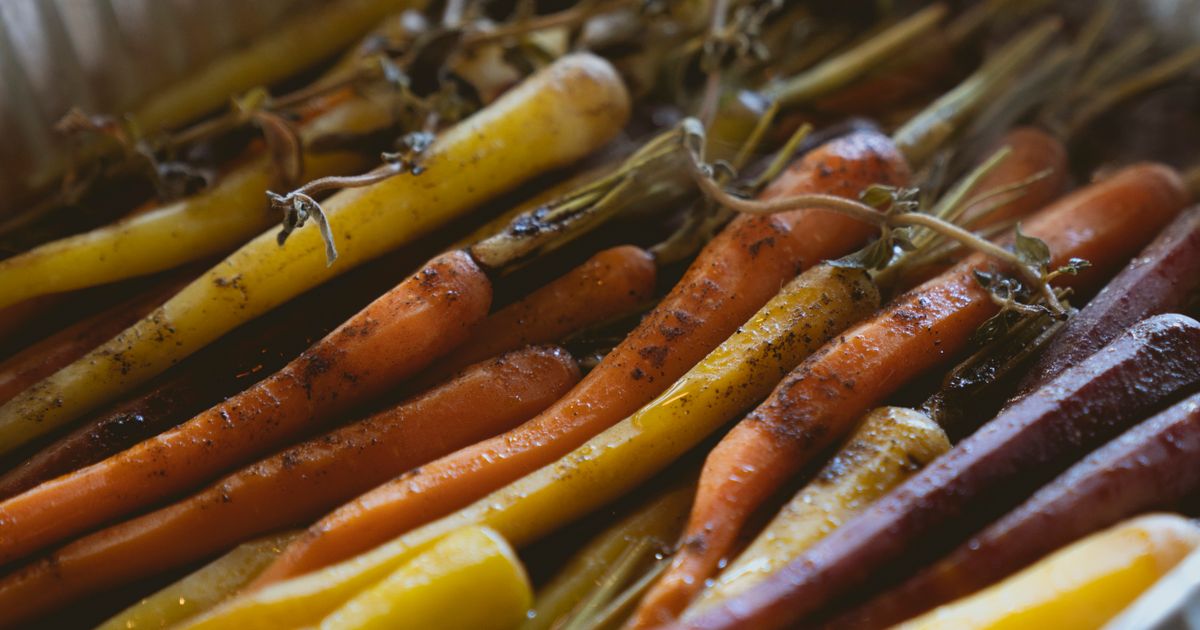
Honey glazed carrots go wrong in exactly one way: the honey goes in too early, the water cooks off, and the glaze scorches on the bottom of the pan before the carrots are tender. Every other detail is flexible. This recipe fixes the timing, then gives you two methods that use the same four ingredients: a 15-minute stovetop skillet for weeknights and a 25-minute oven roast for a holiday table when the stovetop is spoken for.
Both versions use 1 1/2 pounds of carrots, 2 tablespoons of butter, 2 tablespoons of raw honey and salt. That ratio makes a glaze that coats without pooling. Double it for a crowd; the timing barely changes.
TL;DR: Stovetop: simmer carrots covered with water, butter and salt for 6 to 8 minutes, uncover, reduce, then add honey and toss for the last 2 to 3 minutes until glossy. Oven: roast at 425°F with oil and salt for 20 minutes, then brush with honey butter and roast 5 minutes more. Either way, honey goes in at the end.
Honey Glazed Carrots at a Glance
| Stovetop | Oven-roasted | |
|---|---|---|
| Total time | 15 minutes | 25 to 30 minutes |
| Texture | Tender, glossy, evenly coated | Caramelized edges, deeper flavor |
| Best for | Weeknights, small batches | Thanksgiving, large trays, hands-off cooking |
| Serves | 4 to 6 as a side | 4 to 6 as a side |
| Honey timing | Last 2 to 3 minutes | Last 5 minutes |
Ingredients
- 1 1/2 pounds carrots (about 8 medium), peeled
- 2 tablespoons unsalted butter
- 2 tablespoons raw honey
- 1/2 teaspoon kosher salt, plus flaky salt to finish
- 3/4 cup water (stovetop method only)
- 1 tablespoon olive oil (oven method only)
- 1 teaspoon fresh thyme leaves or a pinch of black pepper, optional
- Squeeze of lemon, optional
Medium carrots, the ordinary bagged kind, glaze best. They have more sugar and less water than the jumbo ones and hold their shape after simmering. Rainbow carrots work the same way and look better on a platter; keep the colors in separate rows if you roast them, because the purple ones bleed.
Method 1: Stovetop Honey Glazed Carrots (15 Minutes)
This is the version to learn first. Everything happens in one skillet and you can see the glaze form.
Step 1: Cut the carrots evenly
Slice peeled carrots on the diagonal into 1/2-inch pieces. Even thickness is the whole game here. A mix of thin coins and thick chunks means the thin ones turn to mush while the thick ones are still crunchy.
Step 2: Simmer until just tender
Put the carrots in a 10 to 12-inch skillet with the water, butter and kosher salt. Bring it to a boil over high heat, cover, and reduce to a steady simmer. Cook 6 to 8 minutes, until the tip of a knife slides into a piece with just a little resistance. They will cook further during the glaze, so stop a touch early.
Step 3: Uncover and reduce
Take the lid off and raise the heat to medium-high. Let the liquid boil down until only a few tablespoons remain in the pan, about 2 to 3 minutes. Swirl the pan now and then.
Step 4: Add the honey and glaze
Now, and only now, stir in the honey. Toss the carrots constantly for 2 to 3 minutes. The remaining liquid and the butter will thicken into a syrup that clings to every piece and turns glossy. When the pan goes quiet and the glaze looks like a thin caramel, you are done. If it starts to smell toasty or darken at the edges, pull it off the heat immediately.
Step 5: Finish
Off the heat, add a squeeze of lemon (it keeps the sweetness from going flat), a pinch of flaky salt and the thyme. Serve warm.
Method 2: Oven-Roasted Honey Glazed Carrots (25 Minutes)
Roasting gives you browned edges and a deeper, sweeter carrot, and it frees the stovetop. The only difference in principle is that the honey is brushed on near the end rather than reduced in a pan.
- Heat the oven to 425°F. Line a sheet pan with parchment; honey glaze welds itself to bare metal.
- Cut the carrots. Halve them lengthwise if they are thick, or cut into 3-inch batons. Whole slim carrots roast beautifully and look the part on a holiday platter.
- Toss with oil and salt. Spread in a single layer with space between pieces. Crowding steams them.
- Roast 20 minutes, flipping once halfway, until the carrots are tender and browning at the tips.
- Make the honey butter. While they roast, melt the butter and stir in the honey.
- Glaze and finish. Brush or drizzle the honey butter over the carrots, toss on the pan, and roast 5 minutes more. The glaze will bubble and set. Any longer and the honey goes from caramel to bitter.
- Season and serve with flaky salt, thyme and a squeeze of lemon.
Why the Honey Goes In Last
Honey is mostly fructose and glucose, and fructose browns and then burns at a lower temperature than table sugar. On a 425°F sheet pan or in a dry skillet, honey moves from golden to scorched in about a minute. Water in the pan protects it; once the water is gone, the clock is running.
That is why both methods hold the honey back. The carrots get tender first, on water or oil, and the honey only meets direct heat for the last few minutes, long enough to thicken and cling, not long enough to burn. The same rule holds for honey glazed salmon and for any honey-based marinade that goes under a broiler.
Variations
Brown butter honey carrots. Cook the butter alone in the skillet until it smells nutty and the milk solids turn golden, then proceed with the stovetop method. The nuttiness is very good against the honey.
Orange honey glazed carrots. Replace 1/4 cup of the water with fresh orange juice and finish with a little grated zest.
Hot honey carrots. Swap in hot honey for the plain honey, or add a pinch of red pepper flakes with the honey. Sweet, hot and buttery on a soft carrot is hard to beat.
Balsamic honey carrots. Add 1 tablespoon of balsamic vinegar with the honey. The glaze turns darker and a little tangy.
Honey glazed baby carrots. Bagged baby carrots work in the stovetop method with no cutting. They are wetter than whole carrots, so expect the reduce step to take a minute or two longer.
Garlic and herb. Add a smashed garlic clove to the skillet with the water; fish it out before serving. Swap thyme for rosemary or chopped parsley.
Which Honey to Use
The glaze is only four ingredients, so the honey is not hiding behind anything.
- Raw wildflower honey gives the glaze a floral edge that reads as more than "sweet." It is what we use, and our raw California wildflower honey in the 16 oz squeeze bottle is the easiest format to measure two tablespoons from.
- Clover honey makes a cleaner, more neutral glaze. Nothing wrong with it; it just tastes like sugar syrup with a hint of honey. The raw honey vs. clover honey comparison explains the flavor gap.
- Crystallized honey is fine. It melts the moment it hits the warm pan. No need to warm the jar first.
If your honey has set solid, a spoonful stirred into 2 tablespoons of softened butter also makes a quick honey butter you can toss the roasted carrots in straight from the oven.
Make-Ahead and Thanksgiving Notes
Carrots are the easiest holiday side to do ahead.
- Up to 2 days ahead: Peel and cut the carrots. Store them submerged in cold water in the fridge so they do not dry out. Drain and pat dry before cooking.
- Same day, stovetop: Cook through Step 2 (simmered, just tender) in the morning. Leave them in the skillet with their liquid, covered, off the heat. Before serving, bring back to a boil, reduce, and glaze. Total time at the stove: 5 minutes.
- Same day, oven: Roast the carrots through step 4 in the morning. Before serving, reheat on the sheet pan at 425°F for 5 minutes, then glaze and roast 5 more.
- Doubling: Use two skillets or two sheet pans. One overcrowded pan steams instead of glazes.
Storage and Reheating
- Refrigerator: 4 days in a sealed container. The glaze will firm up as it chills.
- Reheat: In a skillet over medium heat with a splash of water, tossing until the glaze loosens and coats again, about 3 minutes. The microwave works but the glaze stays sticky rather than glossy.
- Freezer: Not recommended. Cooked carrots go spongy after freezing.
Frequently Asked Questions
Why did my honey glaze burn?
The honey went in before the water had cooked off, or it stayed on the heat too long after it did. Add the honey only when a few tablespoons of liquid remain, keep the carrots moving, and pull the pan the moment the glaze looks like thin caramel. In the oven, five minutes after glazing is the limit at 425°F.
Can I use baby carrots for honey glazed carrots?
Yes. Use the stovetop method exactly as written with no cutting. Bagged baby carrots hold more water, so the uncovered reduce step may take a minute or two longer before you add the honey.
Can I make honey glazed carrots ahead for Thanksgiving?
Yes. Cook them until just tender earlier in the day and leave them in their liquid. Reduce and glaze in the last five minutes before the meal. For roasted carrots, roast in the morning and do the five-minute honey glaze right before serving.
Do I have to peel the carrots?
No. Scrubbed, unpeeled carrots glaze fine and the skins are not tough. Peel them if the skins look dry or you want a cleaner look on a holiday platter.
Can I substitute maple syrup for honey?
You can, and the method is the same. Maple syrup is thinner and less sweet by volume, so the glaze will be a little looser and less glossy. Honey's thickness is what makes it cling.
The One Rule
Cook the carrots first, glaze them last. Whether you have 15 minutes and a skillet or a full oven on a holiday afternoon, that sequence gives you tender carrots in a shiny honey butter glaze without a scorched pan. Serve them next to honey glazed salmon for a fast dinner, or finish the same meal with honey baked apples and use the jar twice.
Two tablespoons of our raw California wildflower honey is all this glaze needs. It is strained once, never fine-filtered, and it tastes like more than sugar.
Cook With Real Raw Honey
Recipes taste different with unfiltered wildflower honey — more floral, less flat. Start with the 16 oz squeeze bottle.
16 oz · $24.99
Keep reading
Recipes
Honey Glazed Salmon: Restaurant-Quality Recipe in 20 Minutes
Caramelized honey creates the perfect glaze for salmon—sweet, savory, and beautifully browned. This 20-minute recipe delivers restaurant results at home.
Recipes
Honey Butter Recipe with Raw Honey
Whip up rich, creamy honey butter using raw honey. Perfect for toast, biscuits, or holiday dinners. This simple recipe blends sweet and savory with four compound butter variations.
Recipes
Raw Honey Marinades for Meats: 8 Recipes from a Beekeeper's Kitchen
Raw honey's enzymes tenderize proteins while its natural sugars create perfect caramelization. Eight complete marinade recipes for chicken, salmon, pork, steak, shrimp, and wings -- with timing guides and grilling tips from a 4th-generation beekeeping family.
Recipes
Hot Honey Recipe: Make This Trending Condiment at Home
Hot honey has taken the food world by storm. Make your own at home in 10 minutes with raw honey and chili flakes—customize the heat to your taste.
